
Course

Goddess (Shakti)

शक्ति (देवी)

Fourteen texts to the Devi — from the seven hundred verses of Durgā Saptaśatī to the Vedic Śrī Sūkta and Medhā Sūkta.

Enrolment open Live online class Adults, including those taking up a long text for the first time
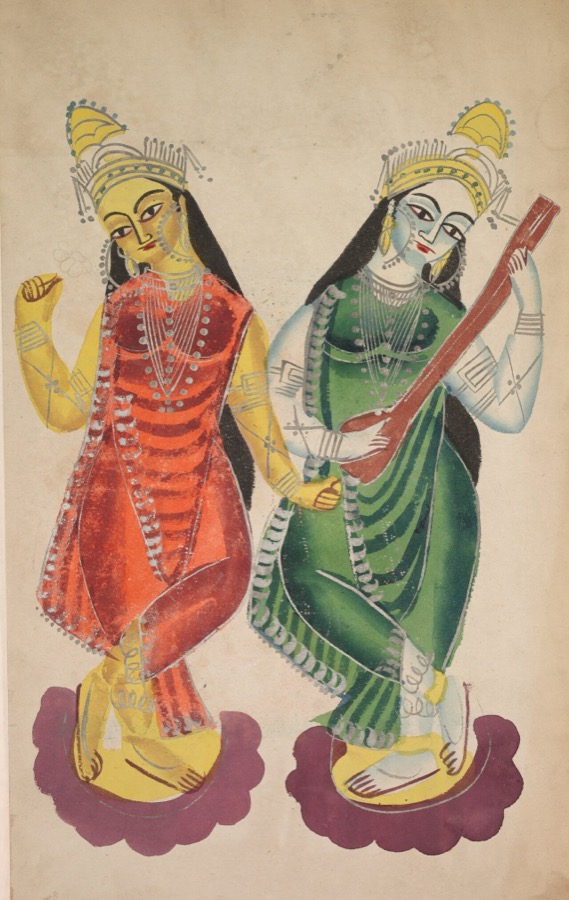
A Kalighat painting of the goddesses Lakshmi and Sarasvati standing together, Sarasvati holding her veena
शक्ति (देवी)

Course Overview

This group holds the longest texts taught here. Durgā Saptaśatī and Śrī Lalitā Sahasranāma both reward steady work over months rather than weeks, and both are taken in ordered sections.

Alongside them sit the hymns recited with the Saptaśatī — Argalā, Devī Kavacha, Siddhakuñjikā — and shorter Stotras that stand perfectly well on their own.

Texts Taught in This Course

A course is built around what you would like to take up. Nobody works through all of these, and they are listed shortest first so there is somewhere comfortable to begin.

  • Stotra

    Argalā Stotra

    One of the short texts recited before the Durgā Saptaśatī. Worth learning early, and useful long before the Saptaśatī itself is attempted.

  • Stotra

    Śrī Mahālakṣmī Aṣṭakam

    Eight verses to Mahālakṣmī, widely recited and quickly learned.

  • Stotra

    Siddhakuñjikā Stotra

    The “key” — a compact text recited in place of the full Saptaśatī when there is not time for it.

  • Stotra

    Śrī Nīla Sarasvatī Stotra

    A short hymn to Nīla Sarasvatī, close in feeling to the other Sarasvatī texts in this group.

  • Mantra

    Sarasvatī Mantra

    The mantra to Sarasvatī — brief, and often the first thing a learner keeps up without being asked to.

  • Vedic Sūkta

    Medhā Sūkta

    A short Vedic hymn for clarity of mind, often taken up by students. Brief enough to be a first taste of Vedic intonation.

  • Stotra

    Śrī Annapūrṇā Stotra

    Adi Shankara’s verses to Annapūrṇā of Kashi, who gives food. Warm in tone and straightforward to learn.

  • Vedic Sūkta

    Śrī Sūkta

    The Vedic hymn to Śrī, recited with its own intonation. A good first encounter with Vedic recitation, which asks something different of you than a Stotra does.

  • Stotra

    Mahiṣāsura Mardinī Stotra

    “Ayi Giri Nandini” — insistently rhythmic, and a pleasure once the pulse settles. It is the rhythm rather than the sounds that takes the work.

  • Stotra

    Devī Kavacha

    The “armour” of the Devi, recited before the Saptaśatī. Long and list-like, and a genuine test of breath and concentration.

  • Stotra

    Kanakadhārā Stotra

    Adi Shankara’s hymn, said to have brought down a shower of gold. The metre is dense and rewards slow, repeated practice.

  • Chālīsā

    Sarasvatī Chālīsā

    Forty verses in Hindi rather than Sanskrit, which many learners find an easy way in — the sounds are already familiar before the Sanskrit ones are.

  • Scripture

    Durgā Saptaśatī

    Seven hundred verses from the Mārkaṇḍeya Purāṇa, across thirteen chapters. Taken a chapter at a time over a long period — most learners work towards it rather than beginning with it.

  • Sahasranāma

    Śrī Lalitā Sahasranāma

    The thousand names of Lalitā, taught in sections. The names run together as soon as the pace picks up, so the work here is keeping each one distinct.

What You Will Learn

  • Recite long texts in order, section by section, without losing accuracy
  • Sustain an even rhythm across hundreds of verses or names
  • Pronounce the Vedic Sūktas with attention to their intonation
  • Understand the structure of the Saptaśatī and what precedes it
  • Keep a disciplined practice going over a long text

Who Can Join

  • Adults committing to a long, ordered study
  • Learners who recite the Saptaśatī already and want it corrected
  • Anyone wanting the shorter Devi Stotras on their own

How It Is Taught

  1. 1 Listen first. Each line is heard clearly before it is attempted, so the ear learns the sound before the tongue shapes it.
  2. 2 Pronunciation is broken down syllable by syllable, with attention to the placement of each sound.
  3. 3 Rhythm and breath are practised slowly, then brought to their natural pace.
  4. 4 Meaning is explained in simple language so the words are understood, not only repeated.
  5. 5 Individual corrections are given during class, gently and specifically.
  6. 6 Recitation is brought together with awareness and devotion.

Structure of a Class

01 Opening prayer and a settling of attention
02 Revision of the previous session, with corrections
03 New lines: listening, syllable work and slow repetition
04 Explanation of meaning and context
05 Rhythmic recitation together
06 Practice guidance for the week ahead

Questions People Ask

No prior knowledge of Sanskrit is required. Recitation is taught by ear and by syllable, with meaning explained in simple language. Learners who already recite are helped to refine pronunciation and rhythm.

No. The texts listed are what is taught within this group, and a course is arranged around what a learner or batch would like to take up. Some learners work through several; others come for one particular Stotra.

Both. Small groups and individual classes are available. Groups are kept small enough that every learner is still heard and corrected personally.

Classes are conducted live online so that pronunciation can be corrected personally. Practice material is shared to support regular revision between sessions.

Timings and fees are shared directly on enquiry, as they depend on the batch, the learner group and time zones. Please use the enquiry form and you will receive the current details.

Enquire

Ask About Goddess (Shakti)

Send a note about your experience so far and what you would like to learn, and you will receive current timings and details.

Preferred way to be contacted

Fields marked * are required.